
Police Car Chase: Police Games
Emerging Games StudioRacing
3.816.00 Reviews
- Version
- 8.9
- Installs
- 5.00M
- Age Rating
- Teen
Screenshots
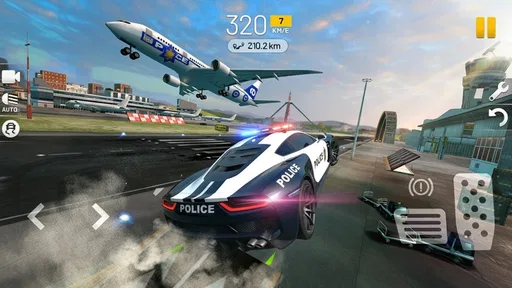
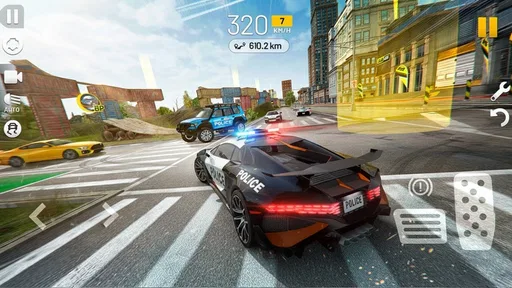
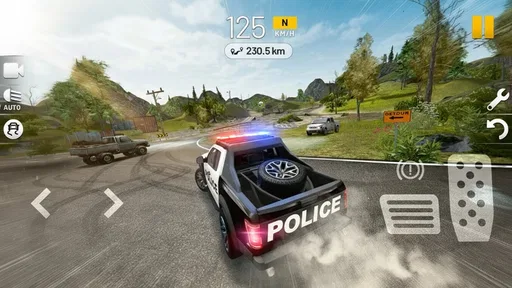
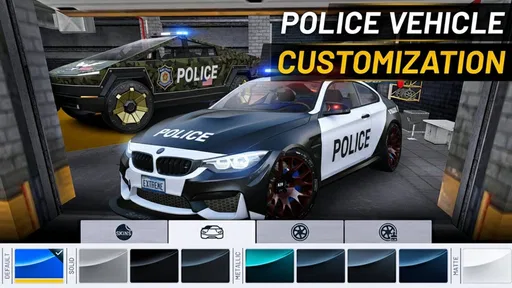
Our Review of Police Car Chase: Police Games
 Analysis by Appyee
I approached Police Car Chase: Police Games expecting a straightforward mobile racing game, and that is exactly where its appeal begins. The idea is easy to understand: get behind the wheel of a police car, pursue criminals, and complete the chase before the situation gets away from you. I did not need a long explanation to understand the basic goal, which makes it a comfortable choice when I want a quick game rather than a complicated driving simulation.
What makes this game worth trying is its focused premise. It is built around the excitement of pursuit instead of asking me to learn a large racing career, tune a garage, or memorize a long list of controls. That simplicity also defines its limits. If you are looking for realistic motorsport, deep vehicle customization, or a broad open-world police simulator, this is unlikely to replace those experiences. If you want a free police-themed driving game that you can open and understand quickly, it has a more suitable starting point.
What the first session feels like
The game comes from Emerging Games Studio and sits in the racing category, although its identity is more about police pursuits than traditional lap racing. I found that distinction useful before installing it. You are not approaching it like a serious track racer where the main challenge is shaving time from a circuit. The fantasy is different: identify the target, stay in control, and bring the chase to a successful conclusion.
It is free to install, which lowers the barrier for casual players. There are optional in-app purchases ranging from $0.99 to $19.99 per item, so I would still treat it as a free-to-start game rather than assuming every part of the experience is entirely without spending. That does not automatically make the purchase system a problem, but it is worth remembering if you are choosing a game for a child or trying to keep a device completely payment-free.
The content rating is Teen, so I would not choose it for a very young child without checking whether the tone suits them. The police-and-criminal theme is clear from the beginning, and the emphasis is on pursuit rather than peaceful driving. For older children, teenagers, and adults who enjoy action-flavored racing, the premise should feel familiar and accessible.
The game has reached over 5 million installs, with an average rating of 3.8 from around 2,300 ratings. I read that as a sign of broad interest rather than a guarantee that every player will love it. The smaller number of written reviews compared with the overall rating means I would rely more on my own first session than on a single enthusiastic or critical comment. In practice, the best question is whether you enjoy short police chases more than detailed racing progression.
Getting started without overthinking the controls
My advice for a first-time player is to begin with the simplest possible objective: learn how the car responds before worrying about finishing quickly. Police pursuit games can feel more difficult than they really are when a player immediately tries to turn, accelerate, and chase at full speed. I found it more useful to make a few deliberate movements, notice how much space the car needs to change direction, and then build speed once the steering felt familiar.
This is especially important on a phone, where the display is smaller than a console television and touch input can feel less precise. Keep your hands positioned so that you can see the road rather than covering the most important part of the screen. If the interface feels crowded, slow down for a moment and identify which controls are essential for steering and which can wait until you are comfortable.
The current version is 8.9, and the game supports devices running Android 7.1 or later. That makes it approachable for people using older compatible Android phones, although compatibility alone does not promise identical performance on every device. A newer phone may feel smoother, while an older one could make fast turns or busy chase moments less comfortable. I would close other demanding apps before playing if the phone is modest, simply to give the game the best chance of responding cleanly.
One practical habit helped me more than trying to memorize every control immediately: I treated the first attempt as a driving lesson rather than a test. If I missed the target or turned too widely, I paid attention to why it happened. Was I entering the corner too quickly? Was I correcting the steering too late? That approach turns an unsuccessful chase into useful information instead of making the opening feel frustrating.
How to reach the first meaningful success
The first satisfying milestone is not merely moving the police car. It is completing a pursuit with enough control that the result feels intentional. To get there, I recommend staying behind the target rather than taking reckless shortcuts during the opening moments. The instinct in a chase is to drive as aggressively as possible, but excessive speed often creates the exact problem you are trying to avoid: a missed turn, a wide corner, or a loss of visual contact.
Use the road ahead as your main source of information. Watch for changes in direction before they arrive, and begin adjusting early instead of waiting until the car is already at the corner. This small change in timing is one of the most useful techniques for a new player because it reduces sudden corrections. A calm approach also makes it easier to understand whether the challenge comes from your driving or from the particular situation in front of you.
I would also avoid restarting instantly after one mistake. Continue for a little longer and observe how the chase develops. Sometimes a poor opening does not make the entire attempt worthless, and you may discover that recovering smoothly is more valuable than chasing a perfect run. This is a good way to learn the game’s rhythm without turning every minor error into a complete reset.
For a realistic everyday use case, imagine having a short break between errands or while waiting for a friend. This is where the game makes the most sense to me. I can start with a clear goal, play a pursuit, and stop without needing to remember a complicated storyline or manage a large collection. It is less suitable for a long evening devoted to competitive racing if you need deep strategy, extensive progression, or a strong sense of simulation.
Another useful approach is to change only one habit at a time. First work on steering, then on maintaining a safe distance, and only later on chasing more aggressively. Changing everything at once makes it difficult to identify what improved. With a police chase, controlled driving usually gives better feedback than constant acceleration and frantic movement.
Where new players may become confused
The store summary makes the objective sound simple, but a simple objective does not mean every chase will feel obvious. A first-time player may wonder whether speed, positioning, or avoiding mistakes matters most. My answer is to prioritize control first. A fast police car that repeatedly loses its line is less useful than a steady one that remains close enough to continue the pursuit.
It is also easy to assume that the game should behave like a conventional racing title. In a normal race, the track and finish line define the challenge. Here, the chase changes the way I judge success. I am thinking about where the target is, how to approach the next turn, and whether a risky move will actually improve the situation. That difference explains why somebody who enjoys racing games may still need a few attempts before the game feels natural.
Another point of confusion is the balance between immediate action and longer-term motivation. The game’s premise gives me a reason to start a session, but players who need a large progression system may find the experience less satisfying than a full racing franchise. I would not install it expecting the same depth as a major console-style racer. Its strength is the compact police pursuit idea, not an elaborate motorsport career.
The presence of in-app purchases is another reason to pay attention while navigating the game. I would avoid treating every optional item as necessary during the opening session. First decide whether the driving itself is enjoyable. Spending before understanding the basic loop can make it harder to tell whether a purchase genuinely improves your experience or simply removes a little early friction.
For families, the Teen rating and purchase range deserve a practical conversation before handing over the phone. The game is free, but free installation does not mean that every later choice is free. I would use the device’s purchase controls if a younger player will have access, and I would explain that progress or convenience items should not be selected automatically. That is sensible advice for this game in particular because its action-focused structure can encourage quick decisions during a chase.
How it compares with other racing choices
Compared with arcade racers built around drifting, lap times, and flashy vehicle collections, this game offers a narrower but more recognizable role-playing fantasy. I am not choosing a generic car and entering an anonymous competition; I am taking the police side of a pursuit. That theme can make a short session feel more purposeful, especially for players who have always preferred emergency vehicles to sports cars.
Compared with realistic driving simulators, it is the easier recommendation for someone who wants action without studying detailed vehicle behavior. A simulator is better if you care about authentic handling, careful braking, and the discipline of real road driving. This game is better when you want the drama of a chase and are willing to accept a more direct, game-like experience.
It also differs from large open-world police games. Those alternatives may provide exploration, side activities, and a broader sense of place, while this title concentrates attention on the pursuit itself. That focus can be a strength on a mobile device because I do not have to spend a long time traveling to the interesting part. The trade-off is that players seeking freedom, investigation, or a living city may find the experience too contained.
For someone who normally plays endless runners, the comparison is also useful. Both can fit short breaks, but the driving focus asks for more attention to direction and timing. If you want something you can play almost automatically, an endless runner may be more forgiving. If you want your hands and eyes involved in a clear vehicle-based objective, the police chase format gives you more immediate purpose.
Three practical ways to get more from each chase
First, use the opening seconds to establish a safe line rather than trying to create a dramatic catch immediately. This is a small tactical trade-off: you may lose a little time at the start, but you gain a better chance of staying in control when the road changes. It is particularly helpful for players who keep overshooting turns.
Second, judge success by recovery as well as capture. A player who can regain control after a mistake is learning a skill that transfers to later attempts. Instead of treating a collision or missed turn as proof that the run is finished, look for the quickest calm route back into the chase. This turns the game from a reflex-only experience into a modest exercise in decision-making.
Third, separate enjoyment from spending. Play enough to understand whether the core pursuit is fun with the standard experience available to you. If you are still bored without an optional item, buying something is unlikely to solve the real issue. If you already enjoy the chase and want to support a longer session, you can make that decision more deliberately because you know what the game offers.
A fourth tip is to match the game to your attention level. When I am tired, I prefer slower, more deliberate attempts because rushed driving produces avoidable errors. When I have more focus, I can experiment with tighter approaches and quicker decisions. This makes the game more flexible than it first appears, but it also means that the same chase can feel easy or irritating depending on how much attention I am able to give it.
Who should install it and who should skip it
I would recommend it to a player who likes police themes, short driving challenges, and objectives that can be understood immediately. It is also a reasonable choice for someone using an older compatible Android device who wants a free racing game without committing to a large, complicated download experience. The broad install count suggests that the concept has reached many players, but personal taste still matters more than popularity here.
I would be more cautious about recommending it to a dedicated racing fan who expects licensed cars, detailed tuning, competitive lap records, or realistic physics. Those players will probably be happier with a specialized racing simulator or a more comprehensive arcade racer. I would also skip it if your main interest is exploring a large city as a police officer, since the central attraction is the chase rather than a broad law-enforcement sandbox.
Players who dislike touch driving may need patience during the first few attempts. The game’s simple premise does not remove the need for timing, and a small screen can make corrections feel less natural than they would with a physical controller. If precise steering is your top priority, a controller-focused alternative may suit you better. If you are comfortable adapting to mobile controls, the learning curve should feel manageable when approached gradually.
My final recommendation after settling into the chase
After looking at the game as both a quick pastime and a longer-term racing option, I see it as a focused police pursuit experience rather than an all-purpose driving game. Its best quality is that I understand the fantasy immediately and can work toward a concrete success without learning a complicated world. The police role gives ordinary mobile driving a clearer sense of purpose, and that is enough to make a short session enjoyable when I am in the right mood.
Its weaknesses are just as important. The narrow premise may not provide enough variety for players who want a deep racing career, realistic simulation, or extensive exploration. The Teen rating means it is not an automatic choice for every child, and the optional purchase range means I would keep an eye on spending settings. Older compatible devices are welcome, but the feel of the game can still depend on how comfortably the phone handles touch input and fast movement.
My recommendation is to install it with modest expectations, spend the first session learning control rather than chasing perfection, and decide about optional purchases only after the basic pursuit loop has earned your interest. If the thought of following a target through a fast mobile chase sounds more appealing than completing laps or tuning a sports car, this game has a clear reason to be on your shortlist. If not, a conventional arcade racer or a driving simulator will probably be a better match.
For me, the deciding question is simple: do you want a police chase you can understand within moments, or a complete racing world that asks for a longer commitment? Police Car Chase: Police Games answers the first need effectively. It is free to begin, available for Android 7.1 and later, and its version 8.9 shows that it remains an active option for compatible players. I would give it a try for focused pursuit sessions, while keeping its limited scope firmly in mind.
Verdict
Strengths of Police Car Chase: Police Games
- Simple controls make driving easy for casual players.
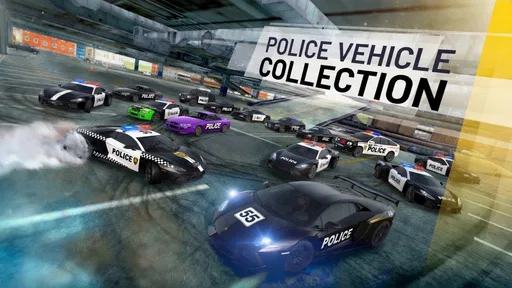
- Multiple police vehicles add variety to the chase experience.
- Short missions are suitable for quick gaming sessions.
- Offline play is convenient when no internet connection is available.
- Chase-focused gameplay delivers immediate action without complex tutorials.
Limitations of Police Car Chase: Police Games
- Repetitive missions may become predictable after extended play.
- Vehicle handling can feel imprecise during sharp turns.
- Some levels may rely heavily on trial and error.
- Ad interruptions can affect the pace between missions.
- Graphics and animations may feel basic on older devices.
Similar Picks in This Category
View All
Hill Climb Racing
Fingersoft4.3

Dr. Driving
SUD Inc.4.2

Traffic Rider
skgames4.5

Asphalt 8 - Car Racing Game
Gameloft SE4.6

Race Master 3D: Car Racing
Beresnev Games4.6

Extreme Car Driving Simulator
AxesInMotion Racing4.3
Frequently Asked Questions
What is Police Car Chase: Police Games about?
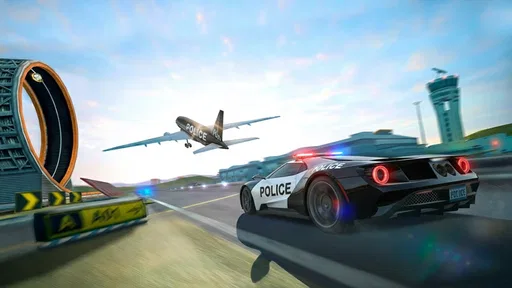
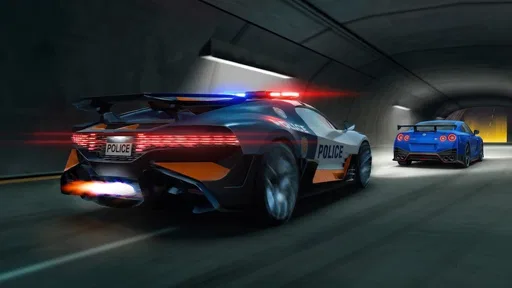
Police Car Chase: Police Games is an action-driving game focused on police pursuits, patrol missions, and high-speed chases. You usually drive police vehicles through city environments, follow suspects, avoid obstacles, and complete objectives under pressure. The game combines arcade-style driving with police-themed missions, making it more accessible than a realistic simulator while still offering plenty of fast-paced gameplay.
Can I play Police Car Chase: Police Games offline?
The game may support offline play for its main driving and chase missions, which is useful when you do not have Wi-Fi or mobile data available. However, certain features can depend on an internet connection, including advertisements, in-app purchases, online rewards, updates, or other connected services. It is best to launch the game once while connected so all required files can load correctly.
Is Police Car Chase: Police Games free to download?
Police Car Chase: Police Games is generally available as a free download, allowing players to try its police missions and driving challenges without paying an upfront purchase price. Like many free mobile games, it may include advertisements and optional in-app purchases for upgrades, vehicles, currency, or other bonuses. Check the store listing before downloading for the latest pricing and age information.
What devices are compatible with the game?
Compatibility depends on the specific Android or iOS version available in your region and the requirements set by the developer. Most recent phones and tablets should handle the game, although older devices may experience longer loading times, reduced graphics quality, or occasional performance issues. Before installing, review the app-store requirements and make sure you have enough free storage for the game and future updates.
Does the game offer realistic police driving and customization?
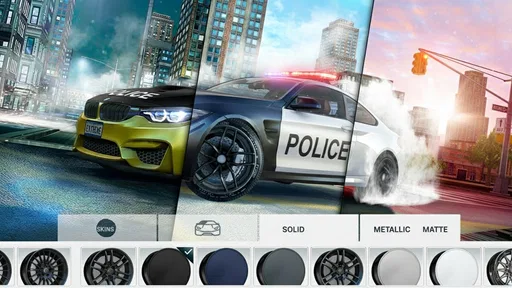
Police Car Chase: Police Games is primarily designed as an arcade experience rather than a detailed law-enforcement simulator. You can expect accessible controls, dramatic pursuits, traffic obstacles, and mission-based driving instead of fully realistic police procedures. Depending on the version, the game may include multiple police cars, upgrades, or visual customization, but the available options can vary after updates and between platforms.
Play our best games!


